Landing an in-studio interview is exciting. It can also be intimidating.
Suddenly, you’re thinking about things you never considered during a Zoom interview: What should I wear? Where do I look? What do I do with my hands? Is someone going to do my makeup? Are my shoes going to be on camera?
And somewhere in the middle of all that, you’re also supposed to remember what you want to say.
After more than three decades of preparing experts, authors, executives and thought leaders for media interviews, I’ve learned something important:
Great interviews rarely happen because someone memorized all the right answers. They happen because someone prepared enough to stop worrying about the interview and start having a conversation.
Here are a few of the basics we teach our clients at Wasabi Publicity:
Dress for the camera
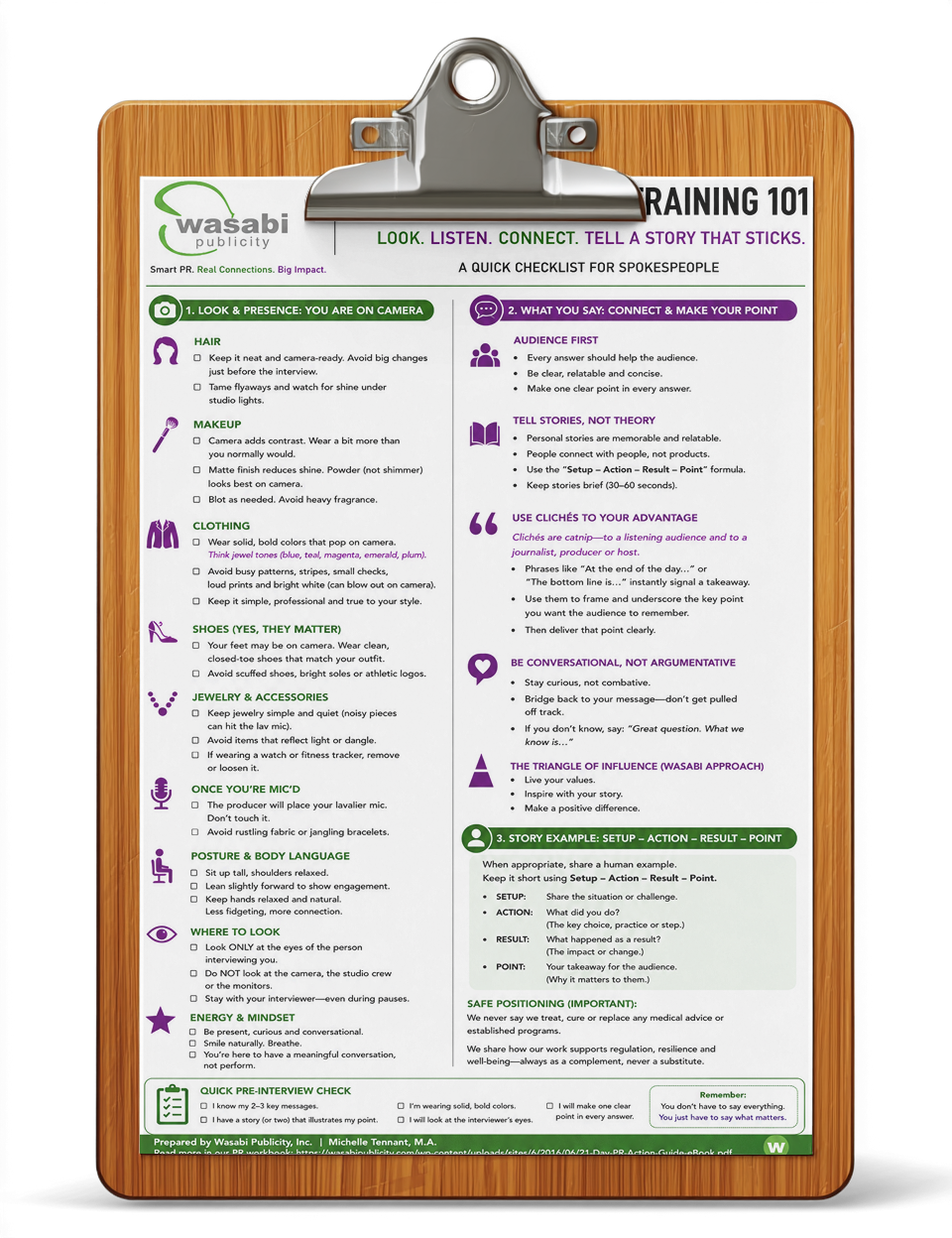
Wear solid, bold colors. Jewel tones such as blue, teal, magenta, emerald and plum tend to work well.
Avoid busy patterns, stripes, small checks and bright white, which can be problematic under studio lighting.
Keep jewelry simple and quiet. Remember that the producer may attach a lavalier microphone to your clothing, so avoid anything that will rub, rustle or jangle against it.
And yes, think about your shoes. Depending on the studio setup, your entire body may be on camera.
Know where to look
This is one of the easiest ways to look more natural on television or video.
Look at the person interviewing you.
Not the camera.
Not the producer.
Not the crew.
Not the monitor showing your own face.
Stay connected to the interviewer’s eyes, just as you would during a great conversation over coffee.
Tell stories, not theory
People connect with people, not talking points.
Rather than explaining everything you know about your subject, think about a real person, experience or moment that illustrates your point.
At Wasabi, we teach a simple storytelling structure:
Setup → Action → Result → Point
What happened? What did you do? What changed? And most importantly, why should the audience care?
Keep it short. Thirty to 60 seconds is often plenty. As we teach in our 21-Day PR Action Guide, great media stories make a point without wandering down every side road.
Use clichés to your advantage
Yes, really.
Clichés can be catnip to a listening audience and to a journalist, producer or host because they signal, “Here comes the takeaway.”
“At the end of the day…”
“The bottom line is…”
“Here’s what really matters…”
Use these familiar phrases intentionally to frame the idea you most want people to remember. Then make your point clearly and stop talking.
Remember who the interview is for
Your job is not to squeeze your company, book, product or service into every answer.
Your job is to entertain, educate and enlighten the audience. When you give people something genuinely useful, interesting or memorable, the interview naturally creates interest in you and your work. That audience-first philosophy is at the heart of our PR approach.
And listen. A good interview is a conversation, not a performance. Don’t become so determined to deliver your prepared talking points that you stop responding to the human being sitting across from you.
One last thing before the cameras roll
You don’t have to say everything.
You just have to say what matters.
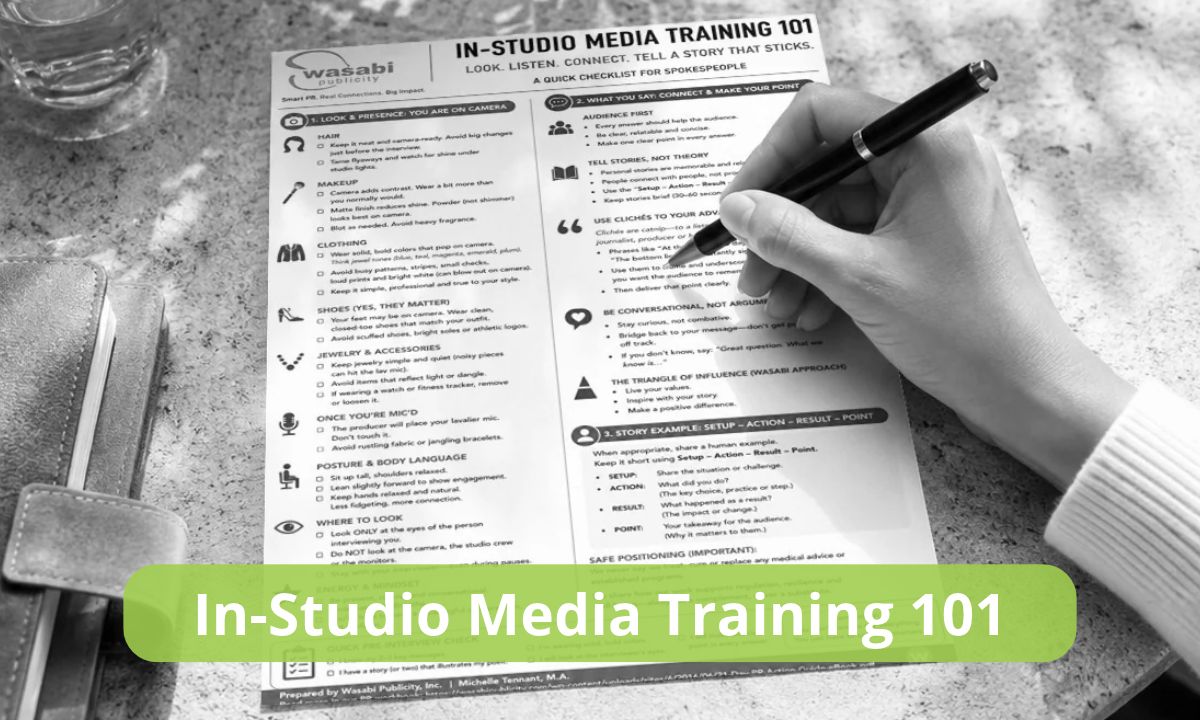
That’s why we created our Wasabi Publicity In-Studio Media Training 101 one-page checklist. Save it, print it and review it before your next studio interview.
For a deeper dive into storytelling, sound bites and becoming the kind of guest journalists want to invite back, explore our 21-Day PR Action Guide.
Look. Listen. Connect. Tell a story that sticks.
Ready to crush your next in-studio interview?
If you’d like experienced eyes on your publicity opportunities or want to discuss how to strategically and safely grow your visibility, we invite you to connect with our team.
Schedule a free strategy call to learn how we can help you join the conversations that matter most.